The Israel-Palestine conflict is a long-standing and deeply rooted geopolitical conflict centered in the Middle East. It primarily revolves around competing national aspirations, historical grievances, and territorial disputes between Israelis and Palestinians. The conflict has its origins in the late 19th and early 20th centuries and has evolved over time, with numerous factors contributing to its complexity.
Historical Background: The conflict has its roots in the late 19th century when Jewish immigration to Palestine, then part of the Ottoman Empire, increased as part of the Zionist movement, which aimed to establish a Jewish homeland in historic Palestine. This led to tensions with the Arab population, who viewed the land as their own.
British Mandate: After World War I, the League of Nations granted Britain a mandate over Palestine. During this period, tensions between Jewish and Arab communities escalated, and competing national identities began to crystallize.
United Nations Partition Plan (1947): In 1947, the United Nations proposed a partition plan that would have divided Palestine into separate Jewish and Arab states, with an international administration for Jerusalem. The plan was accepted by Jewish leaders but rejected by Arab leaders, leading to conflict and violence.
1948 Arab-Israeli War (War of Independence): Following the declaration of the State of Israel in 1948, neighboring Arab states invaded, resulting in a war that saw significant displacement of Palestinians and the establishment of the state of Israel. This event remains a core point of contention, with Palestinians referring to it as the Nakba (catastrophe).
1967 Six-Day War: Israel’s victory in the Six-Day War resulted in the occupation of the West Bank, East Jerusalem, Gaza Strip, and the Sinai Peninsula. The continued occupation of these territories remains a central issue in the conflict.
Palestinian Nationalism: Over time, Palestinian nationalism grew, with Palestinians seeking self-determination and statehood. The Palestinian Liberation Organization (PLO), led by Yasser Arafat, became a prominent voice for Palestinian aspirations.
Israeli Settlements: Israel’s construction of settlements in the occupied territories has been a major source of conflict. The settlements are considered illegal under international law and have complicated efforts to reach a two-state solution.
Status of Jerusalem: The status of Jerusalem is a highly contentious issue. Both Israelis and Palestinians claim Jerusalem as their capital, and its status has been a key obstacle to peace negotiations.
Security Concerns: Israel cites security concerns, including terrorism and threats from militant groups like Hamas in Gaza and Hezbollah in Lebanon, as a reason for strict control over borders and territories.
Failed Peace Initiatives: Numerous attempts at peace negotiations, including the Oslo Accords and the Camp David Summit, have not resulted in a lasting resolution. Trust issues, disputes over key issues, and political changes on both sides have hindered progress.
International Involvement: The international community, including the United States, has played a significant role in the conflict, both through diplomatic efforts and financial aid. However, differing international perspectives and interests have sometimes complicated peace initiatives.
Advertisement:

- Package includes 100pcs various and high quality Free Palestine vinyl waterproof stickers.
- The stickers are made of high quality PVC, which are vinyl stickers and waterproof stickers, strong stickiness, not easy to fall off.
- The gentle adhesive make our decorative stickers can stick to clean surfaces, also remove easily without any sticky residue and restick again.
- Feel free to customize your laptop, cellphone, water bottle, skateboard, scrapbooking, wall, bicycle, etc.
- Please contact us if you have any question on our products.


- Express Your Solidarity: Wearing the Palestine flag pin is a powerful way to show your support for the Palestinian people and their quest for justice and peace. It's a symbol of hope, resilience, and the enduring spirit of the Palestinian nation.
- Three-Pack Convenience: This set includes three Palestine flag pins, allowing you to share them with friends and family or keep spares for different outfits. It's a cost-effective way to have multiple pins for various occasions.
- Versatile and Stylish: These flag pins can be effortlessly attached to clothing, backpacks, hats, and more. Their compact size makes them a subtle yet impactful accessory that complements any outfit.
- Thoughtful Gift: These flag pins make a meaningful and considerate gift for those who share your sentiments or for anyone looking to expand their collection of meaningful accessories.
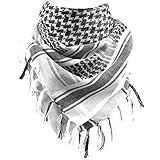
- MATERIALS: This Tactical Shemagh is made from Premium Woven fabric & NOT PRINTED, extremely soft, breathe freely, lightweight, quick-drying, no fade, no deformation and anti-wrinkle. This fabric, skin-friendly and absorb sweat, gives you a very comfortable and warm experience. Washing Instructions: Only careful hand washing with cold water and no bleach or dryer, line dry
- MULTI-FUNCTION: Arab Scarf, also known as the Keffiyeh, Kerchief or Shemagh. FREE SOLDIER Keffiyeh Scarf with thick & ultralight material keep you cool in desert or woods, protects your head, face and neck from sun, wind, dust and sand efficiently. Not only used as military scarf around the world, but also be used for daily as a neck warmer, head wear, hand towel, bed sheet, and blanket
- APPROPRIATE SIZE: The shemagh tactical scarf large enough, size approximately 43” x 43”, which wrapping the scarf around your head and neck provides optimal protection from the various environments without sacrificing the shemagh look you want. The large size allows them to be worn as a neck scarf for men or used for a wide variety of other purposes. Especially suitable for outdoor activities such as hunting, shooting, hiking, climbing, motorcycling, paintball, etc
- SUPERIOR DESIGN: The fabrics with Jacquard Weave and Decorative Tassel, enhance the overall fashion sense of the Desert Scarf. 6 different classical colors available. Perfect for daily life, you can dress them up or wear them casually. Net weight: 190g (6.7oz). Ultra-light and breathable design, makes the shemagh scarf extremely comfortable for you to wear
- PERFECT FOR OUTDOOR: Whether you're looking for Heavy Duty Military Shemagh or fashion scarf men, FREE SOLDIER shemagh scarf men can perfect use for law enforcement, outdoor enthusiast, patrol, deployment, missions, desert, camping, cycling, fishing, jungle, running, mountaineering, traveling, working, daily and so on. Please do not hesitate to contact us if you have any problems

- 【Solidarity for Peace and Justice】Palestine Flag Wristband Bracelet is a symbol of solidarity and unity, let you wear it proudly to show your stand on current issues and express your solidarity with Palestine
- 【Symbol of Freedom】The "Free Palestine" flag on the bracelet is a strong statement of support, allowing you to express your solidarity and hope for a better future
- 【Suitable Size】: Bracelets are about 8 inches in length, 0.47 inches in width, since the bracelet is elastic, it can fits most adult wrist sizes, suitable for men women
- 【Soft material and comfortable】: High quality and environmentally friendly silicone, can be used many times over; soft to the touch, easy to take off and comfortable to wear
- 【Perfect after-sales】If you have any problem after receiving the Palestine bracelet, pls reach out to us, we will help you and reply you within 10 hours.
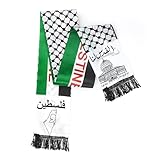
- Fashion Accessory: The Palestine Scarf is not only a thoughtful and meaningful gift but also a fashion accessory that adds a stylish touch to any outfit. It can be worn as a scarf, shawl, or even a turban, making it a versatile fashion accessory.
- HIGH QUALITY MATERIAL: These Palestine flag silk scarves are made of high-quality fabric that is soft and comfortable, lightweight and durable, and not easy to wear and tear.
- BEAUTIFUL COLORS: these Palestine flag silk scarves are produced with advanced technology, which makes the colors of the Palestine flag bright and vivid and not easy to fade.
- MULTIPURPOSE AND USEFUL: This Palestine silk scarf is not only a fashion item to add a sense of style to your outfit but also protects from cold, wind, and sun and can be used as a cape, shawl, and scarf.
- PRODUCT SIZE: Each Palestine Flag Silk Scarf has 6 x 53 inch, for a total of 2 pieces of Palestine flag silk scarves.

- Stand with Palestine and Gaza for justice and peace
- great present for anyone who supports peace in the middle east in the world
- Lightweight, Classic fit, Double-needle sleeve and bottom hem

- Super sticky stickers made with quality material and print
- Sized perfectly at 2.25"x1.25" - Slap them everywhere!
- Made with mostly paper - avoid placing in damp areas or prolonged direct sunlight

- Masalha, Nur (Author)
- English (Publication Language)
- 464 Pages - 10/05/2023 (Publication Date) - I.B. Tauris (Publisher)
We get commissions for purchases made through links on this website. As an Amazon Associate I earn from qualifying purchases.